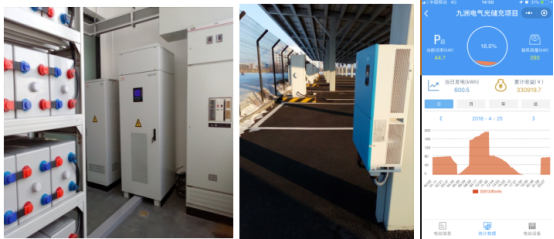

KSTAR provides PV and Energy Storage System in EV Charging Station
KSTAR News, 2020.7.9
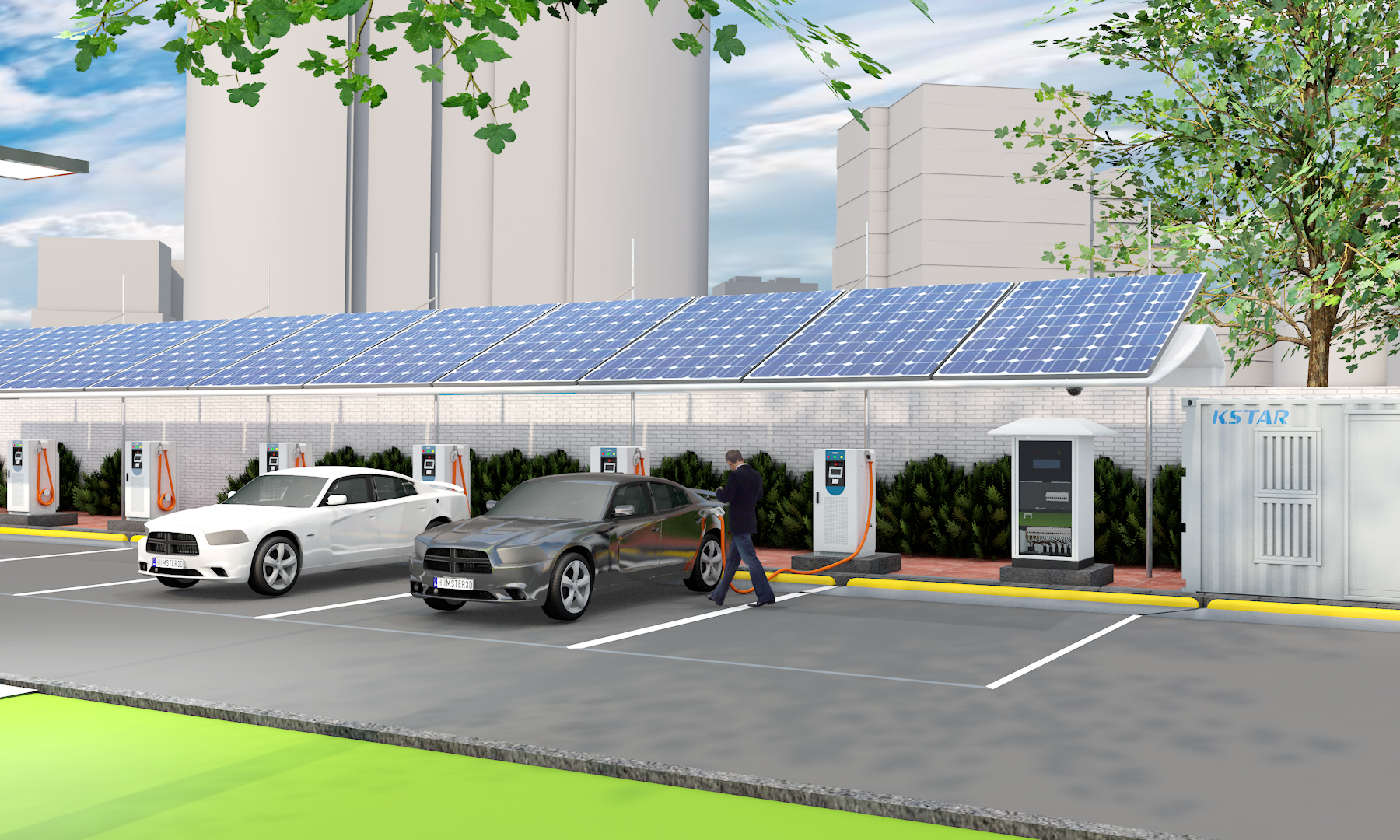
Electric vehicles (EVs) produce no tailpipe emissions, helping to reduce carbon emissions and air pollution. They are a more environmentally friendly transport option. KSTAR provides an intelligent, simple and elegant solution that integrates photovoltaic (PV) power generation and energy storage systems into EV charging stations.
KSTAR combines its own product portfolio with an EV charging system design centred on new-energy electric vehicles. By integrating solar power generation and energy storage, the solution provides green electricity and helps create a more sustainable living environment.
(1) Economical and Efficient
Photovoltaic panels installed on parking canopies supplement the power supply, enable peak and off-peak electricity price arbitrage, and expand the available power distribution capacity of charging stations.
(2) Multifunctional
The system integrates photovoltaic power generation, energy storage and the electricity consumption of EV charging stations. It can operate flexibly in a variety of modes.
(3) Intelligent
EV charging stations can receive dispatch instructions from different control layers, including local power distribution systems and centralised microgrids.
(4) Emergency Power Supply
The energy storage system can provide emergency backup power for important loads, such as EV chargers.
(1) Intercity expressways and highways, supporting energy integration and more economical transport.
(2) Urban bus charging stations and public EV charging stations, improving energy utilisation and adding value by making use of otherwise idle areas.
(3) Other applications, including unused rooftops, parking canopies and charging station power distribution capacity expansion. These needs can be addressed through the integration of multiple power sources.
3.1 Daytime Peak Hours
During daytime peak hours, photovoltaic power is used by the charging stations. Excess electricity is stored in the energy storage system or fed back into the grid. When PV generation is insufficient, the energy storage system discharges to supplement the charging station's power supply.
This operating mode can help increase revenue from renewable energy generation, defer investment in power distribution and capacity expansion, and generate savings through peak and off-peak electricity price arbitrage.
3.2 Night-time Off-peak Hours
During night-time off-peak hours, the photovoltaic system stops generating electricity. The charging stations and energy storage system are then supplied with electricity from the public grid.
(1) Hebei Zhongtai 50 kW/200 kWh EV Charging Station with Solar PV and Battery Storage
Commercial Mode: Self-consumption + Backup + Peak Shaving
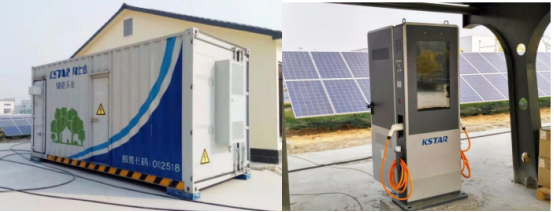
(2) Harbin JZE 100 kW/700 kWh EV Charging Station with Solar PV and Battery Storage
Commercial Mode: Self-consumption + Backup + Peak Shaving