


4 Key Elements of Data Center Infrastructure Design
Industry Trends News, 2020.10.29
Data centre infrastructure refers to the complete set of components that make up a data centre, including all IT infrastructure devices, equipment and technologies. When selecting critical infrastructure for your data centre, such as racks, power supply systems, cooling systems, security and environmental monitoring, there are four key elements to consider.
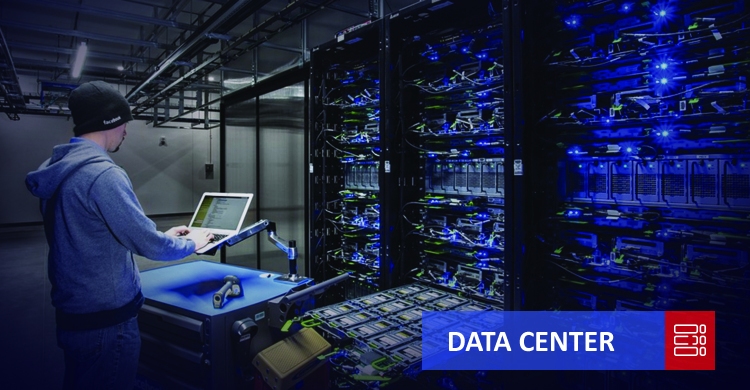
The number of racks determines the physical space required for IT equipment and equipment rooms. Common IT rack dimensions are 600 mm (24 inches) wide, 1,070 mm (42 inches) deep and 42U high. Determining how many racks you plan to deploy is the first step in space planning.
Inform your supplier of your data centre's redundancy requirements and power distribution architecture. For general data centres, an N+1 configuration is usually sufficient to provide redundancy for power and cooling equipment. For Tier III data centres, the design includes N+1 cooling equipment redundancy, dual power supplies with 2N power redundancy, and independent dual power distribution frames.
The average power density per rack multiplied by the number of racks gives the maximum IT load of the data centre. You should then account for the power consumption of the data centre's power supply system, cooling system and other facilities, such as switches and storage equipment. Adopting a modular strategy is a practical approach, as it can reduce costs while maintaining flexibility for future expansion.
Building a data centre in a location with a low ambient temperature can help reduce cooling costs and improve power usage effectiveness (PUE). Avoid areas that are frequently affected by natural disasters, such as earthquakes, floods and hurricanes, as well as regions exposed to conflict. Choosing an appropriate location helps keep your data centre safe, reliable and energy-efficient.
Designing data centre infrastructure can be a time-consuming task. However, technological advances in recent years have made turnkey solutions available to simplify the process of building a data centre.
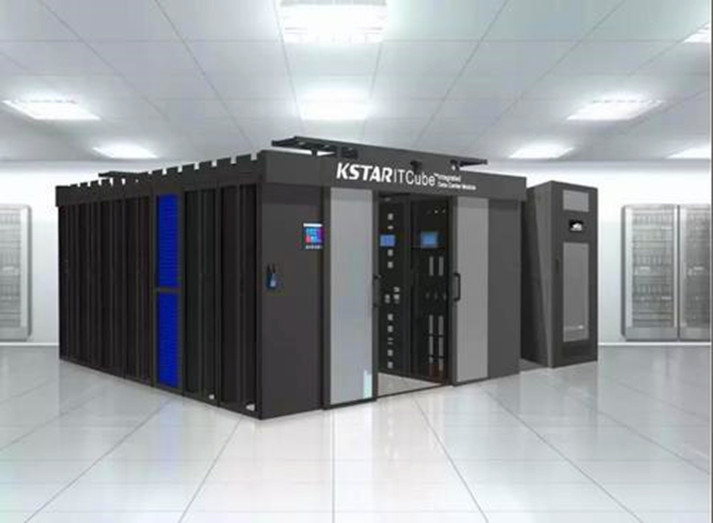
KSTAR's turnkey data centre solution integrates power supply and distribution systems, batteries, cooling systems, fire protection and cabinets into an enclosed system. It also incorporates industry best practices in data centre design and operation, including:
More and more forward-looking enterprises recognise that intelligent modular data centre solutions, also known as integrated data centre solutions, with high reliability and availability represent a future trend. They offer advantages in both initial investment and long-term operating costs. With simplified and standardised designs, businesses can start with a smaller deployment and expand as their needs grow.
With 27 years of experience in the energy market, KSTAR specialises in critical power protection, renewable energy and data centre infrastructure solutions. Its products serve customers in more than 120 countries and regions across a wide range of industries, including finance, transport, manufacturing, communications, government, education, healthcare and power. In 2019, KSTAR ranked among the top six companies in the global UPS market by market share (Source: UPS Hardware Market Tracker 2020 report by Omdia).
Learn more about KSTAR Data Centre Infrastructure Solutions.
